|
|

| Title: Date of the Day - Science and Industry | |
| Generalhistory > General > General Discussion | Go to subcategory: |


| Author | Content |
MarkUK

|
|
|
Date Posted:2026-01-01 08:42:52Copy HTML 1 January 1781 - The World's First Iron Bridge Opened. In 1776 a proposal to construct a wholly metal bridge across the Severn Gorge between the Shropshire villages of Benthall and Madeley was put before Parliament. The necessary Act was passed with the the work for the design going to Thomas Pritchard and the actual casting and construction to Abraham Darby of the Coalbrookdale Ironworks, Shropshire. Work began in 1777 and although the river was spanned as early as July 1779 the bridge was not formally opened to traffic until New Year's Day 1781. It is 100 ft long weighing 378 tons. Such was the fame of the construction that the town that grew up around the two villages was renamed Ironbridge. Closed to road traffic in 1934 it remains in use for pedestrians.
You're playing chess with Fate and Fate's winning.
Arnold Bennett
|
|
MarkUK
|
Share to:


 #176
#176
|
|
Re:Date of the Day - Science and Industry Date Posted:2026-02-20 09:07:48Copy HTML 20 February 1913 - Construction of Canberra began. As Australia moved towards Dominion status (effective independence) in the late 19th century a debate arose as to which city, Sydney or Melbourne, should be the new capital. In the end it was decided that Melbourne would serve as temporary capital until a new centre was built. After much further debate it was decided that it would be constructed in New South Wales but no closer than 100 miles from Sydney. Several sites were examined and rejected before in 1908 a site in the Yass-Canberra area was chosen. New South Wales formally ceded the site to the Federal government in 1911 whereupon an international competition to design the new capital was announced. The winning design went to Walter Burley Griffin of Chicago with work beginning in February 1913 with the Australian Parliament moving in in 1927. You're playing chess with Fate and Fate's winning.
Arnold Bennett
|
|
tommytalldog
|
Share to:
#177
|
|
Re:Date of the Day - Science and Industry Date Posted:2026-02-20 10:59:23Copy HTML From 1913 to 1927 seems like a long time. Of course, they started from scratch. |
|
MarkUK
|
Share to:
#178
|
|
Re:Date of the Day - Science and Industry Date Posted:2026-02-20 12:33:40Copy HTML The war delayed things. People moved in pretty quickly but the Parliament building took a long time. You're playing chess with Fate and Fate's winning.
Arnold Bennett
|
|
MarkUK
|
Share to:
#179
|
|
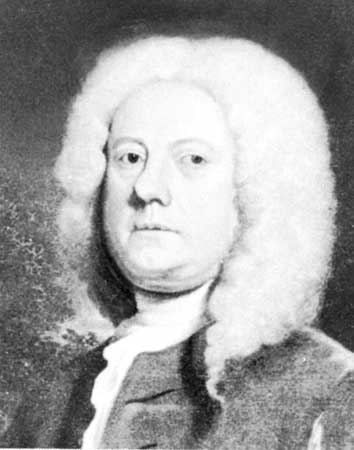
Re:Date of the Day - Science and Industry Date Posted:2026-02-21 08:39:59Copy HTML 21 February 1741 - Jethro Tull died. English agriculturalist inventor of the horse-drawn seed drill and horse-drawn hoe thus providing the basis for modern agriculture. He published two books on the subject in 1731 and 1739 detailing his experiences and development of his machinery at his farm in Shalbourne, Berkshire.
You're playing chess with Fate and Fate's winning.
Arnold Bennett
|
|
tommytalldog
|
Share to:
#180
|
|
Re:Date of the Day - Science and Industry Date Posted:2026-02-21 10:57:16Copy HTML C'mon Mark, Jethro Tull was a rock band from the 60's. This feller is an imposter. |
majorshrapnel

|
Share to:
#181
|
|
Re:Date of the Day - Science and Industry Date Posted:2026-02-21 01:22:07Copy HTML C'mon Mark, Jethro Tull was a rock band from the 60's. This feller is an imposter. And a bit of a weird one at that. |
|
tommytalldog
|
Share to:
#182
|
|
Re:Date of the Day - Science and Industry Date Posted:2026-02-21 01:44:23Copy HTML C'mon Mark, Jethro Tull was a rock band from the 60's. This feller is an imposter. And a bit of a weird one at that. Yes, but I liked that flute or piccolo or whatever it was. Added a different sound. |
|
majorshrapnel
|
Share to:
#183
|
|
Re:Date of the Day - Science and Industry Date Posted:2026-02-21 04:16:29Copy HTML Flute |
|
MarkUK
|
Share to:
#184
|
|
Re:Date of the Day - Science and Industry Date Posted:2026-02-22 08:40:11Copy HTML 22 February 1857 - Heinrich Hertz born. German physicist who proved the existence of electromagnetic/radio waves. The SI unit Hertz (Hz) is named in his honour.
You're playing chess with Fate and Fate's winning.
Arnold Bennett
|
|
MarkUK
|
Share to:
#185
|
|
Re:Date of the Day - Science and Industry Date Posted:2026-02-23 09:01:20Copy HTML 23 February 1944 - Leo Baekeland died. Belgian-American scientist, inventor of Bakelite. Born in Belgium he and his wife emigrated to the USA shortly after their marriage in 1889 where he continued his work into photographic papers. His first achievement was the founding of a company manufacturing Velox photographic paper before he turned to chemical research into synthetic materials. In 1907 he produced a synthetic resin he named Bakelite or to give it its correct chemical name polyoxybenzylmethylenglycolanhydride. This was the first genuine plastic. In 1910 he founded the General Bakelite Co. You're playing chess with Fate and Fate's winning.
Arnold Bennett
|
|
MarkUK
|
Share to:
#186
|
|
Re:Date of the Day - Science and Industry Date Posted:2026-02-24 08:53:59Copy HTML 24 February 1815 - Robert Fulton died. American inventor and engineer. He began his working career as a painter but on a visit to England in the 1780s he developed an interest in engineering most notably canals. His stay in Europe lasted for 20 years during which time he visited Paris and widened his interests into steam-powered navigation, submarines and torpedoes. He returned to the USA in 1806 and used the expertise he had gained to construct the North River Steamboat the first successful steam-powered vessel. From 1807 he ran regular trips between New York and Albany covering the 150 mile journey in an average 32 hours.
You're playing chess with Fate and Fate's winning.
Arnold Bennett
|
|
tommytalldog
|
Share to:
#187
|
|
Re:Date of the Day - Science and Industry Date Posted:2026-02-24 11:38:16Copy HTML Her name was The Clermont. Another early steamer in the Buffalo area was the "Walk In The Water" named after an Indian chief. |
|
MarkUK
|
Share to:
#188
|
|
Re:Date of the Day - Science and Industry Date Posted:2026-02-24 12:50:35Copy HTML It's usually referred to as the Clermont, but it was never known by that name at the time. The use of the name first appeared in 1817 three years after it had been withdrawn from service. You're playing chess with Fate and Fate's winning.
Arnold Bennett
|
|
MarkUK
|
Share to:
#189
|
|
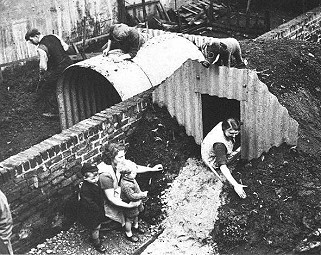
Re:Date of the Day - Science and Industry Date Posted:2026-02-25 09:00:12Copy HTML 25 February 1939 - the first Anderson shelter erected. GB began serious thought to protecting civilians from air raids in the 1920s after German air raids in the First World War killed around 1500 people. The use of tunnels or the London Underground was OK for the capital but the bulk of the UK population had no such recourse. In 1938 the Home Office commissioned two engineers to construct simple, easy to erect air raid shelters large enough to accommodate a family but small enough to site in a garden. They came up with a design which they named after the government Minister responsible for air raid precautions Sir John Anderson. They were made of corrugated steel could be either erected above ground or better still buried. The curved roof was protection against shrapnel. Every household with space to erect one were given an Anderson shelter with the first being erected in a garden in Islington, north London in February 1939. By the outbreak of war in September over half a million had been installed, the final figure was more than two million across the country. They proved remarkably effective surviving everything other than a direct hit. Many were used after the war as sheds, Art probably remembers them as a child.
You're playing chess with Fate and Fate's winning.
Arnold Bennett
|
|
tommytalldog
|
Share to:
#190
|
|
Re:Date of the Day - Science and Industry Date Posted:2026-02-25 11:15:06Copy HTML I have them in my rural area. Farmers still use them for storage; we call them Quonset huts. Never heard them called "Anderson" buildings. |
|
MarkUK
|
Share to:
#191
|
|
Re:Date of the Day - Science and Industry Date Posted:2026-02-25 12:25:17Copy HTML They look similar, but Anderson shelters were smaller specifically for use as air raid shelters and could accommodate no more than six for short periods. At the end of the war they were to be dismantled and the steel handed in, but you could pay to keep one, those are the few that folk used as sheds. Even today a few remain. You're playing chess with Fate and Fate's winning.
Arnold Bennett
|
|
tommytalldog
|
Share to:
#192
|
|
Re:Date of the Day - Science and Industry Date Posted:2026-02-25 01:52:53Copy HTML You Brits are a resourceful lot, wooden airplanes & metal buildings. |
|
majorshrapnel
|
Share to:
#193
|
|
Re:Date of the Day - Science and Industry Date Posted:2026-02-25 02:01:11Copy HTML I remember them well, as they were our dens when we were kids. I grew up in a small avenue and when I finally left home at 23 there were still a couple of them there. |
|
MarkUK
|
Share to:
#194
|
|
Re:Date of the Day - Science and Industry Date Posted:2026-02-26 08:41:40Copy HTML 26 February 1935 - The first British experiments with radar. Although the British are usually credited with the invention of radar it was in fact the Germans who first developed a system in 1934. However they never fully utilized what they'd found leaving it to the British to perfect radar for use in World War II. In a bizarre note it began when the government asked the Radio Research Laboratory (RRL) to look into the possibility of developing a "death ray". The Head of the RRL Robert Watson-Watt said that was unlikely and instead presented a paper on the Detection and Location of Aircraft by Radio Methods. He followed this up with a demonstration at Daventry in February 1935 by detecting an RAF bomber eight miles away and at a height of 6000 ft with a cathode-ray oscilloscope in the back of a van. This led to a dedicated radar establishment being opened at Orfordness, the first of a series of stations along the coast. By the outbreak of war in 1939 GB had 20 radar stations along the east coast and English Channel.
You're playing chess with Fate and Fate's winning.
Arnold Bennett
|
|
tommytalldog
|
Share to:
#195
|
|
Re:Date of the Day - Science and Industry Date Posted:2026-02-26 11:15:19Copy HTML 26 February 1935 - The first British experiments with radar. Although the British are usually credited with the invention of radar it was in fact the Germans who first developed a system in 1934. However they never fully utilized what they'd found leaving it to the British to perfect radar for use in World War II. In a bizarre note it began when the government asked the Radio Research Laboratory (RRL) to look into the possibility of developing a "death ray". The Head of the RRL Robert Watson-Watt said that was unlikely and instead presented a paper on the Detection and Location of Aircraft by Radio Methods. He followed this up with a demonstration at Daventry in February 1935 by detecting an RAF bomber eight miles away and at a height of 6000 ft with a cathode-ray oscilloscope in the back of a van. This led to a dedicated radar establishment being opened at Orfordness, the first of a series of stations along the coast. By the outbreak of war in 1939 GB had 20 radar stations along the east coast and English Channel.
Sonar too. |
|
majorshrapnel
|
Share to:
#196
|
|
Re:Date of the Day - Science and Industry Date Posted:2026-02-26 12:26:40Copy HTML Radar introduction was like a number of people bringing along bricks and then somebody builds you a house. Watson Watt was the builder but, as usual, many contributed to the job in very minor but important ways. At the Battle of Britain it was crude but it worked but what truly transformed it was the invention of the cavity magnetron by John Randal and Harry Boot at Birmingham university a device to produce microwaves.This allowed the radar to be very small and of course allowed it to be fitted into aircraft for submarine hunting. It was called the most important discovery of the Second World War and we sent a man over to the US carrying the worlds most important invention at the time in a bag, which he handed over to the Americans, under Churchill‘s orders for nothing. In 1945 Percy Spencer was playing around with the magnetron when he discovered that it melted the chocolate bar in his pocket. He patented his device in 1945, the microwave oven was born. |
|
MarkUK
|
Share to:
#197
|
|
Re:Date of the Day - Science and Industry Date Posted:2026-02-26 03:13:21Copy HTML I didn't realize the Germans were the first with radar, but never used it to its full potential. Apparently they had eight radar stations up and running along their North Sea coast by the outbreak of war, GB had 20 but along a much longer coastline. Also interesting to note that neither side knew the other had it despite the obvious huge installations they both erected in the summer of 1939. You're playing chess with Fate and Fate's winning.
Arnold Bennett
|
|
MarkUK
|
Share to:
#198
|
|
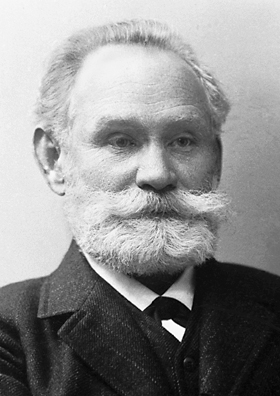
Re:Date of the Day - Science and Industry Date Posted:2026-02-27 08:48:08Copy HTML 27 February 1936 - Ivan Pavlov died. Russian physiologist best known for his work on classical conditioning in his experiments with dogs - Pavlov's Dogs theory for which he won the Nobel Prize in 1904.
You're playing chess with Fate and Fate's winning.
Arnold Bennett
|
|
MarkUK
|
Share to:
#199
|
|
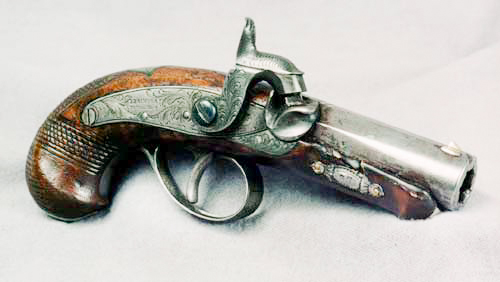
Re:Date of the Day - Science and Industry Date Posted:2026-02-28 08:40:29Copy HTML 28 February 1868 - Henry Deringer died. American gunsmith and inventor of the Deringer pistol. He set up his own business in Philadelphia in 1806 producing the small handgun the Deringer in 1825 which was later copied and manufactured by other arms companies.
You're playing chess with Fate and Fate's winning.
Arnold Bennett
|
|
majorshrapnel
|
Share to:
#200
|
|
Re:Date of the Day - Science and Industry Date Posted:2026-02-28 12:21:31Copy HTML What was the killing range on these weapons Tom? |